


Self-Care for Toxic Stress: Stress Busters
We all have stress in our lives, but did you know that using strategies to manage stress, or prevent it in the first place, can help us live healthier and longer lives?
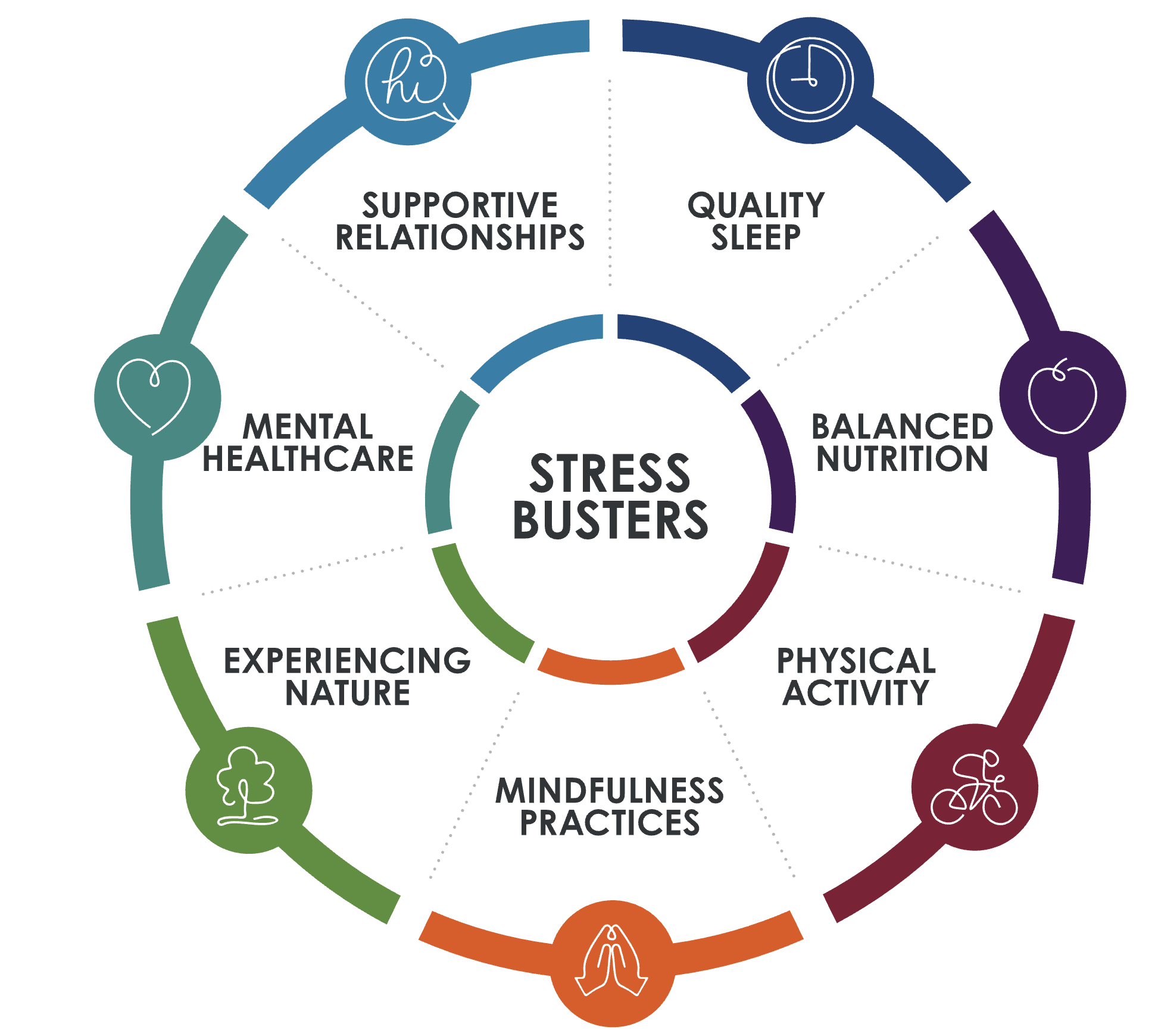
Stress Busters are seven ways you can manage your day-to-day stress as well as counter toxic stress from Adverse Childhood Experiences. All Stress Busters have been shown to improve brain health and immune function and balance stress hormones. See which ones might work best for you and the people you care about.
Check out Stress Buster tips and strategies on ACES Aware’s website and find additional resources on the individual Stress Buster webpages listed below. For professionals interested in the information, skills, and resources to help clients, refer to the Community-Based Organizations Stress Busters Toolkit.
You can also download their complete set of Stress Busters handouts (English & Spanish)

How to Manage Stress
Adverse Childhood Experiences (ACEs) and toxic stress can have long-lasting effects on our bodies and brains. The good news is, there are things we can do every day to counter and prevent toxic stress. Learn more about how to manage toxic stress by watching this video by ACES Aware.
Create Positive Experiences with Your Child to Reduce the Impact of ACEs
As a parent or caregiver, you can create positive experiences with your child to help build resiliency, minimize their exposure to ACEs and help reduce impacts of toxic stress or adverse experiences your child may face growing up. Below are 10 fun examples of simple, everyday activities and behaviors you can do with your child to create a supporting, positive environment that will nurture them and help build their resilience.
By providing children with a safe, caring, nurturing and stable environment, you can help create positive experiences. These positive experiences are also referred to as protective experiences. By supporting children and providing them with positive, protective experiences, they are better equipped to cope with ACEs, trauma and any adversity they may encounter later in life.

What Is Resilience?
Resilience is the ability to adapt, cope and flourish despite difficult and stressful times. With enough protective experiences and coping skills, children can overcome adversity. This is made possible by supporting children and helping them build resiliency starting as early as possible, ideally in childhood. Over time, this skillset is strengthened, which helps to offset trauma caused by ACEs, toxic stress or trauma as well as building a foundation to help them become more resilient adults.
Experts believe that resilience supports more positive health outcomes for children’s health and development even if they have faced negative experiences.
There are seven essential building blocks to developing and supporting resilience in children. Called the seven C’s, the seven building blocks include: Competence, Confidence, Connection, Character, Contribution, Coping and Control.


Additional ways to promote resilience include:
Acknowledging the child’s experience of ACEs and how it may be influencing their behavior. One way to do that is by rephrasing questions to remove any accusatory language that could cast or imply blame or cause the child to feel shame. Instead of asking, “What’s wrong with you?” reconsider how the approach to instead ask, “What happened to you?”
Helping children identify their emotions by encouraging them to talk about how they feel. Create a safe space so that they can talk about their feelings without fear or anxiety.
Supporting children by empowering them to problem solve, work through their issue/problem and find realistic and actionable solutions they can apply to resolve their conflict.
Promoting healthy coping habits, which may include meditation and mindfulness, exercise, healthy eating and/or healthy sleep routines.
Working Together to Build Better Outcomes

We all have a role to play in supporting children so that they can thrive, and Help Me Grow Sacramento can help. We are here, ready to support you by providing a variety of services, including:
Free developmental screenings
Free referrals to health care providers for free ACEs screenings
Introductions to community resources and contacts
Support to parents, community partners and health professionals
Let us know how we can help by contacting us today. The more you know about ACEs, the more you can help reduce its impact and support healthier children so that they can thrive.
Help Me Grow Sacramento is proud to partner with ACEs Aware to launch a public awareness campaign to create awareness around ACEs and steps we can take to support healthier children, families and communities in Sacramento and beyond. The goal of the campaign is to drive awareness about ACEs, its negative impact on children’s health and health outcomes, and encourage ACEs screening to identify and support children who are impacted by ACEs so that they can get the help they need to thrive.